


The Anti-Inflammatory Eating Prescription: Foods That Support Recovery, Mobility, and Healthy Aging

Educational only—not medical advice, diagnosis, or treatment. Read the full Terms of Use and Medical Disclaimer.
The Anti-Inflammatory Eating Prescription: Foods That Support Recovery, Mobility, and Healthy Aging
Inflammation is not automatically the enemy. It is part of the body’s normal response to infection, injury, exercise, and physical stress. The concern is chronic, unresolved inflammation—the kind that can remain active in the background and place added strain on the heart, metabolism, brain, joints, and other tissues.
That is why I do not like reducing anti-inflammatory nutrition to one “superfood,” one supplement, or a list of foods you are never allowed to eat. A more useful approach is to build a repeatable eating pattern that gives the body better raw materials for repair, energy, immune balance, and long-term resilience.
A recent Harvard Health review reached the same practical conclusion: there is no single official anti-inflammatory diet. The strongest model is a Mediterranean-style pattern built around vegetables, fruit, whole grains, legumes, nuts, seeds, olive oil, fish, and minimally processed foods. Plant-forward and DASH-style eating patterns may offer similar benefits. The overall pattern matters more than any single ingredient.
Build a Pattern, Not a Perfect Diet
Food works through repetition. One bowl of berries will not erase a week of poor sleep, inactivity, excessive alcohol, or heavily processed meals. In the same way, one dessert does not ruin an otherwise nourishing eating pattern.
The goal is not dietary perfection. The goal is to make supportive choices more common and inflammatory pressures less common.
A 2025 systematic review and meta-analysis of randomized controlled trials found that Mediterranean-style diets reduced several markers of inflammation in adults. That does not mean this eating pattern cures arthritis, cardiovascular disease, diabetes, or another medical condition. It means the pattern can be one evidence-based part of a larger health plan.
Six Foundations of an Anti-Inflammatory Plate
1. Eat More Colorful Plants
Vegetables, berries, citrus, apples, herbs, onions, and other colorful plants provide fiber, vitamins, minerals, and polyphenols. Polyphenols are natural plant compounds that can influence antioxidant, metabolic, and inflammatory pathways.
Instead of looking for one perfect vegetable, aim for variety. Rotate leafy greens, cruciferous vegetables, peppers, tomatoes, mushrooms, squash, berries, and seasonal produce across the week.
Color is not a perfect measurement of nutrition, but it is a practical reminder to diversify your food inputs.
2. Prioritize Fiber-Rich Foods
Beans, lentils, oats, barley, whole grains, fruit, vegetables, nuts, and seeds help support digestion and the gut microbiome. Certain gut microbes ferment fiber into short-chain fatty acids that help nourish the intestinal lining and participate in immune and metabolic regulation.
Increase fiber gradually when your current intake is low. A sudden increase can cause bloating or discomfort, particularly for people managing irritable bowel syndrome, inflammatory bowel disease, or another digestive condition.
3. Choose Supportive Fats
Extra-virgin olive oil, avocado, nuts, seeds, and fatty fish can replace foods that are heavily fried or high in less-supportive fats.
Salmon, sardines, trout, and mackerel provide the long-chain omega-3 fats EPA and DHA. Walnuts, chia seeds, and flax provide the plant-based omega-3 fat ALA.
The practical strategy is substitution. Use olive oil instead of shortening. Add walnuts instead of a low-fiber processed snack. Choose fish in place of processed meat more often.
You do not need to remove every other source of fat. Focus on improving the overall balance.
4. Include Fermented Foods When Appropriate
Plain yogurt, kefir, kimchi, sauerkraut, miso, and tempeh can add microbial and food diversity.
In a Stanford randomized dietary intervention, participants following a diet higher in fermented foods experienced increased microbiome diversity and reductions in several inflammatory proteins over ten weeks. This was a relatively small study, so fermented foods should be considered one useful tool—not a cure-all.
Start with small servings when you are new to fermented foods or have a sensitive digestive system. People who are immunocompromised, pregnant, or managing a gastrointestinal condition should discuss major dietary changes with a qualified healthcare provider.
5. Use Herbs and Spices
Garlic, ginger, turmeric, rosemary, cinnamon, oregano, black pepper, and other herbs and spices add plant compounds while making whole foods more satisfying.
They work best as part of regular cooking rather than as oversized “therapeutic” doses. More is not always better, and concentrated herbal products can interact with medications or medical conditions.
6. Eat Adequate Protein
Protein supports muscle maintenance, tissue repair, immune function, and recovery from exercise. Fish, poultry, eggs, yogurt, beans, lentils, tofu, tempeh, and other protein sources can all fit into an anti-inflammatory eating pattern.
The appropriate amount depends on body size, age, activity, kidney health, medical history, and personal goals.
For post-rehabilitation clients and older adults, preserving muscle supports balance, walking capacity, confidence, and independence. Nutrition should help you remain active—not become another restrictive project.
Which Foods Should You Reduce?
The Harvard review recommends limiting ultra-processed foods, sugar-sweetened beverages, processed meats, deep-fried foods, and refined carbohydrates. That is a reasonable starting point, but the message needs some nuance.
Not every packaged food is harmful, and not every ingredient with a long name is dangerous. Frozen vegetables, canned beans, plain yogurt, whole-grain bread, and many other convenient foods can support a healthy eating pattern.
Research examining ultra-processed foods and individual inflammatory proteins is still developing. A 2025 cohort analysis found a more complicated relationship than the simple claim that every processed food directly causes inflammation.
A better filter is to ask:
Does this food provide fiber, protein, healthy fats, or meaningful micronutrients?
Is it replacing a more nourishing option?
Does it leave me satisfied and energized?
Has it become the foundation of my diet rather than an occasional convenience?
Reduce foods that dominate the diet without contributing much nutritional value. Do not create unnecessary fear around food.
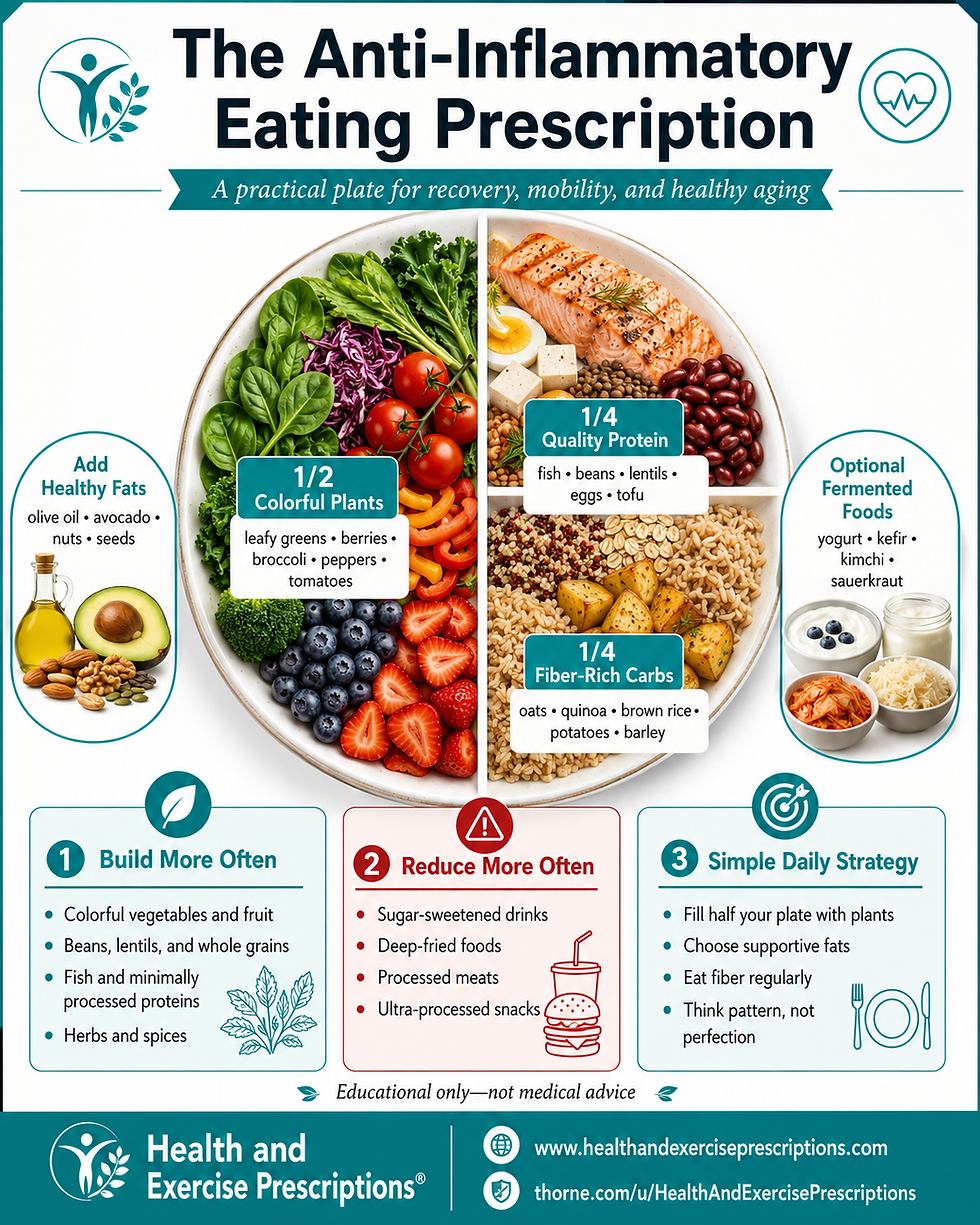
The HEP® Anti-Inflammatory Plate
Use this structure as a flexible guide for most meals:
Half the plate: Vegetables, fruit, or a combination of both.
One quarter: Protein such as fish, poultry, eggs, beans, lentils, tofu, or tempeh.
One quarter: A fiber-rich carbohydrate such as oats, quinoa, brown rice, barley, beans, or potatoes.
Add: Olive oil, avocado, nuts, seeds, herbs, or spices.
Optional: A small serving of fermented food.
A simple day might include oatmeal with berries, walnuts, and plain yogurt for breakfast; a lentil and vegetable bowl with olive oil for lunch; and salmon, roasted vegetables, and potatoes for dinner.
The goal is not to copy this menu exactly. The goal is to recognize the pattern and adapt it to your needs, budget, culture, preferences, and medical history.
Food Is Only One Part of the Prescription
Inflammation is influenced by more than food. Movement, sleep, stress, smoking, alcohol use, body composition, medical conditions, medications, environmental exposures, and recovery habits can all play a role.
A person can eat a nutrient-dense diet and still struggle if they are sleeping five hours, sitting most of the day, living under constant stress, or exercising beyond their recovery capacity.
The body does not operate in separate departments. Nutrition, exercise, nervous-system regulation, hydration, bodywork, and sleep work together.
At Health and Exercise Prescriptions®, this whole-person view is central. The goal is not to chase perfect biomarkers or follow another short-lived wellness trend. The goal is to build enough strength, mobility, energy, and recovery capacity to keep participating in life.
For one person, that may mean returning to hiking after rehabilitation. For another, it may mean carrying groceries, getting out of a chair confidently, playing with grandchildren, or continuing to live independently.
Start With Three Changes
For the next two weeks, choose three realistic actions:
Add one extra serving of vegetables or fruit each day.
Replace one heavily processed snack with fruit, nuts, plain yogurt, hummus, or another nutrient-dense option.
Eat fish, beans, or lentils in place of processed meat at least twice per week.
Small changes repeated consistently are more useful than a dramatic plan you cannot maintain.
Related HEP® Reading
Take the Next Step
For personalized exercise, recovery, and wellness planning in Bellingham, Washington, visit:
Explore professional-quality nutritional support through the Health and Exercise Prescriptions® Thorne store:
View Health and Exercise Prescriptions® on Google:
Supplements are not substitutes for a nutrient-dense diet, medical care, or an individualized health plan. Speak with your physician, pharmacist, or qualified healthcare provider before beginning a supplement—especially if you take medication, are pregnant, or have a diagnosed medical condition.
The HEP® Takeaway
An anti-inflammatory eating pattern is not built through fear, extreme restriction, or one miracle food. It is built through colorful plants, fiber, quality protein, supportive fats, fermented foods when appropriate, and fewer low-value processed choices.
Eat in a way that supports the life you want to keep living. Move safely. Recover fully. Build health through structure, not extremes.
References
Harvard Health Publishing. “Anti-inflammatory Diet: Foods That Help Reduce Chronic Inflammation.” Updated August 3, 2026.
Keshani M, et al. “Mediterranean Diet Reduces Inflammation in Adults: A Systematic Review and Meta-analysis of Randomized Controlled Trials.” Nutrition Reviews. 2025. PMID: 41211687.
Wastyk HC, et al. “Gut-Microbiota-Targeted Diets Modulate Human Immune Status.” Cell. 2021. PMID: 34256014.
Xia LLCH, et al. “Association Between Ultra-Processed Food Consumption and Inflammation: Insights From the STANISLAS Cohort.” European Journal of Nutrition. 2025. PMID: 39960649.
Terms of Use and Medical Disclaimer
Educational only—not medical advice, diagnosis, or treatment.
This content is for educational purposes only and does not constitute medical or rehabilitation advice. Consult your physician or qualified healthcare provider before starting or changing an exercise program, diet, or supplement routine—especially if you have pain, injuries, cardiovascular, metabolic, digestive, or other medical conditions.
Stop any activity that causes sharp pain, dizziness, chest discomfort, or unusual shortness of breath.
Read the complete Terms of Use and Medical Disclaimer.
Author Bio
Jaime Hernandez is a certified health and wellness professional with 25 years of expertise in medical exercise, personal training, therapeutic bodywork, massage, and holistic fitness. He is the founder and Executive Coach of Health and Exercise Prescriptions® in Bellingham, WA, where he develops personalized health and wellness plans designed to help individuals improve strength, mobility, and overall well-being across all stages of life.
Jaime holds certifications as a Medical Exercise Specialist, Licensed Massage Therapist # MA60804408, and trainer in Yoga, Pilates, and Craniosacral Therapy, combining multiple modalities to support post-rehabilitation recovery, preventive health, and functional movement optimization. His approach blends science-based exercise prescription with therapeutic practice to help clients prevent disease, manage chronic conditions, and achieve their health goals.
Health and Exercise Prescriptions®
Thank you for your time and energy...Be well.


Comments